






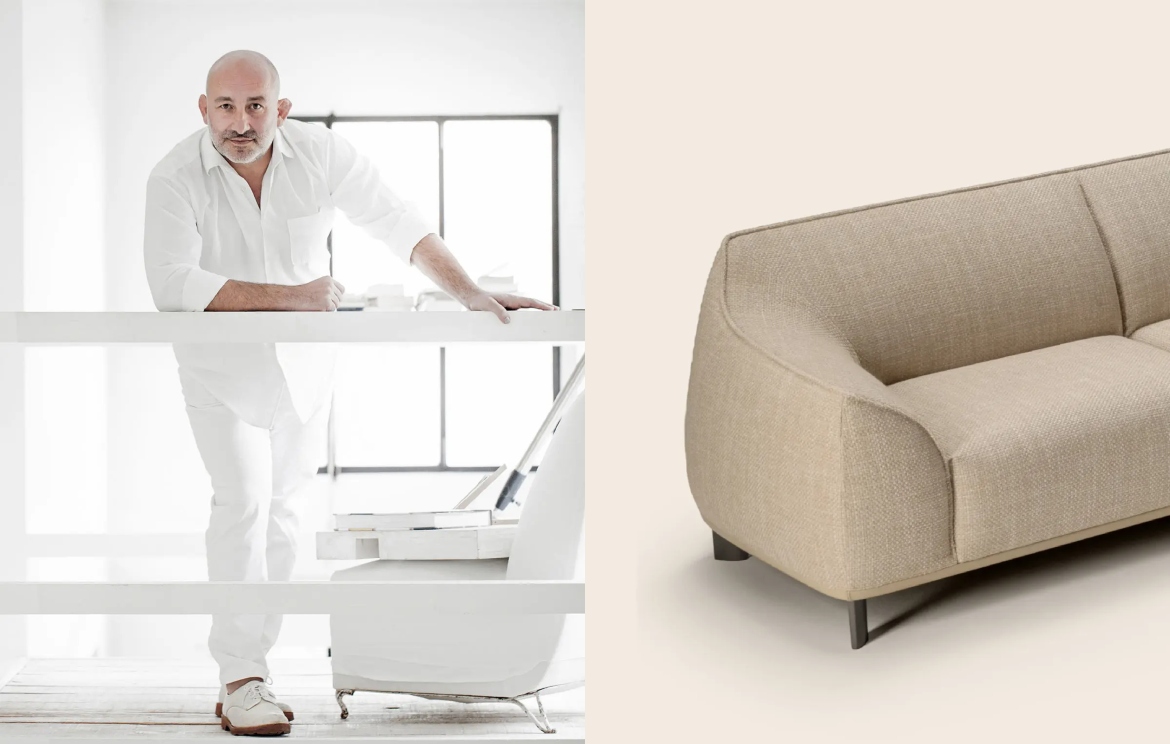
Poltrona Frau, the Italian century-old handcrafted furniture brand, carries over a hundred years of artisanal heritage. When a brand with such classic Italian DNA meets French designer Jean-Marie Massaud, what kind of spark emerges?
At this year’s Salone del Mobile 2026, Ianie Chong, Editor-in-Chief of CreativeHomex, had an in-depth conversation with Jean-Marie Massaud.
Q: As you design for global brands like Poltrona Frau, do you consciously consider regions such as ASEAN? In terms of lifestyle, climate, or cultural nuances — do these factors influence your design approach?
“In my work as a designer, I am indeed influenced by all forms of culture, sensibility, and way of life in general, and by the Asian continent in particular.”
“I have also traveled extensively there for leisure and work, from the automotive industry to resort architecture.”
He adds, “It is worth noting, however, that from Northern China to the Southern Philippines and from Thailand to Japan, we are dealing with very rich and diverse cultures, even if the megacities tend toward homogenization.”
Regarding his specific collaboration, he explains, “In my work for POLTRONA FRAU specifically, my approach is different. This brand has over 100 years of artisanal expertise. I compare it to Italian cuisine: unique and international in its Italian character.” “Wherever you are in the world, it remains true to itself, even as it evolves—high-quality raw materials, simple yet distinctive combinations and transformations.”
Q: How do you balance creating a universal design language while ensuring your work remains relevant across very different markets, especially in regions like Southeast Asia?
“Lightness, reduction, competence, elegance. This is my quest guided by a holistic approach,” he notes. “The home becomes a landscape for living. I like to propose an “easy chic” atmosphere, and to create a feeling of intimacy with the user. Comfort is a due, elegance a must but emotion first. When I arrive at the scale of the object, this translates into a duty of competence, refinement and timeless proportions.”
“I can’t say that I adapt my approach to each market,” he clarifies, “but rather that, on each continent, there are architects and users who find themselves reflected in the designs I offer. There is, of course, the possibility for everyone to choose their finishes, even the height of the legs of a sofa, or the flexibility and comfort, as is the case with the latest Archibald sofa. This allows us to satisfy different cultures and body types.”
Q: From your perspective, what are the key shifts shaping the global furniture industry today — not just in aesthetics, but in how people live, use space, and interact with furniture?
“I see two or three fundamental movements that reflect our expectations, our manners and influence our interiors,” he says. “The first is a shift from the object as “demonstration of social status”, to the object that serves a comfort of life, the competent object.”
“The second, almost antagonistic, is translated by the surge of a new baroque where expression precedence over use,” he adds. “Historically, this phenomenon always occurs at the very end of an era, in societies that are losing their perspective and their ideals.”
“Finally,” he continues, “the subject is moving today from the object itself to the entire living room. More and more users “buy” a Lifestyle recipe, rather than themselves composing their domestic landscape with objects they appreciate. An approach that is certainly more difficult and cultivated, one that requires time! We are in the era of the pre-formatted, the pre-digested. After the wave of “star objects”, broken by the fashion of ready-to-consume “lifestyle”, followed today by a saturation of “deco” objects, we are in great need of a return to an authentic and consistent approach. It’s finally the come back to the greatest classics of the last century, mixed with a few collectible galleries pieces.”
Q: Sustainability is widely discussed today, but often at a surface level. In your work, what defines ‘meaningful sustainability’, and how does it translate into real product development?
“Quality of use, quality of construction, quality of material to sustain. That’s the bare minimum!” he emphasizes. “I also use to design the inside and the architecture of each product. Look for example the Archibald Gran Comfort armchair.”
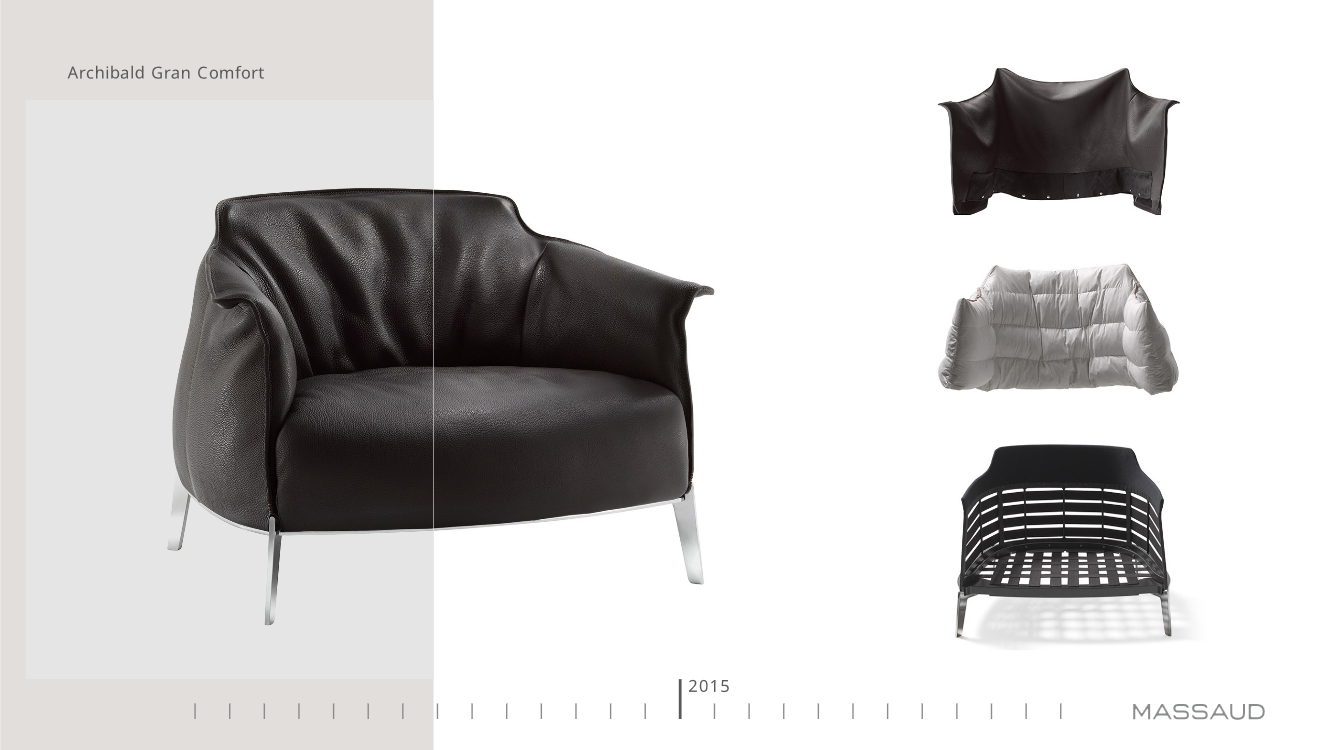
“You can realise, it’s robust, consistent, longliving ; it’s also about reduction: no glue, no staples, no Polyurethane, easy to disassemble and to repair.,” he explains. “This is my demand and also a demand I share with a growing numbers of the brands I work with. Timelessness is a main quality of a good Sustainable design.”
Q: The definition of luxury seems to be evolving — from status-driven to more experience- and meaning-driven. How do you see the future of luxury furniture?
“My feeling is that human nature cannot be changed, and that many people will remain attached to the value of their status through consumer goods.” he observes. “This stems from a lack of confidence in their own choices.”
“However,” he adds, “I believe that the mission of a true luxury brand is to be a laboratory of excellence, which also includes the quality of our lifestyles, in order to offer us good and sustainable products. This is what I cultivate in close collaboration with my partners. Brands rooted in this approach are those capable of offering today the products that will become tomorrow’s classics. In a world of saturation, where everything is copied and manufactured unethically, true luxury brands will become havens for discerning individuals.”
Q: Your work often focuses on improving the way we live. In today’s fast, digital world, how should designers rethink comfort and well-being in the spaces we create?
“There is the world of illusions, which we observe with the saturation of our lives by digital technology.,” he reflects. “At the same time, there is a massive emergence of reconnection to consciousness, to the quality of time in full presence. We, creators of realities, must strive to make these realities not a superficial and ephemeral trend, but enduring and harmonious places and objects, sanctuaries of the present.”
Q: If you were to design specifically for the next generation of homeowners in Asia — younger, urban, and increasingly design-aware — what would you do differently?
“I’m already working on this with some partners. Not specifically on young Asians, but on all young urban generations.”
“Defining new, hybrid, flexible, and more versatile domestic landscapes.” he says, outlining his vision.
“Objects and environments that are far more radical in terms of reduction, lightness, and informal comfort, all in line with a profound commitment to environmental quality. New product architectures freed from bourgeois stylistic codes, revealing more direct forms of expression.”
He concludes, “Fashion, which operates on faster cycles than the capital goods industries, is already exploring new uses and behaviors, “light” production methods, and the codes that accompany this revolution. This puts into perspective what our material world will also become.”
Read more: Salone del Mobile 2026
