







As CIFF Guangzhou continues to expand in scale and sharpen its focus on lifestyle-driven content, international buyers are increasingly treating the fair as a key annual checkpoint. Rather than simply sourcing products, many now see CIFF as one of the most direct ways to understand where the furniture industry is heading — and how changing ways of living are reshaping design, manufacturing and supply chains.

From manufacturing to finished products: a complete industry overview
One of CIFF’s strongest advantages for global buyers is its ability to present the full journey of furniture production within a single event.
At the second-phase CIFM / interzum Guangzhou Expo, the Manufacturing Equipment and Smart Production Platform in Area B of the Canton Fair Complex brings together woodworking machinery, software systems, mechanical components and integrated smart manufacturing solutions under the theme “Linking the World”. The exhibition offers a clear picture of how Chinese furniture manufacturing is moving toward digitalisation, flexible production and lower-carbon operations.

This upstream perspective is complemented by the Design Material Selection Platform in Area C and the Hardware Innovation Experience Platforms on Levels 2 and 3 of Area B. Here, materials and functional hardware — often overlooked yet critical to user experience — take centre stage. This year, the hardware section focuses on “hardware systems enabling spatial evolution”, highlighting intelligent fittings, concealed technologies, integrated functions and whole-solution approaches that are quietly reshaping contemporary furniture design.
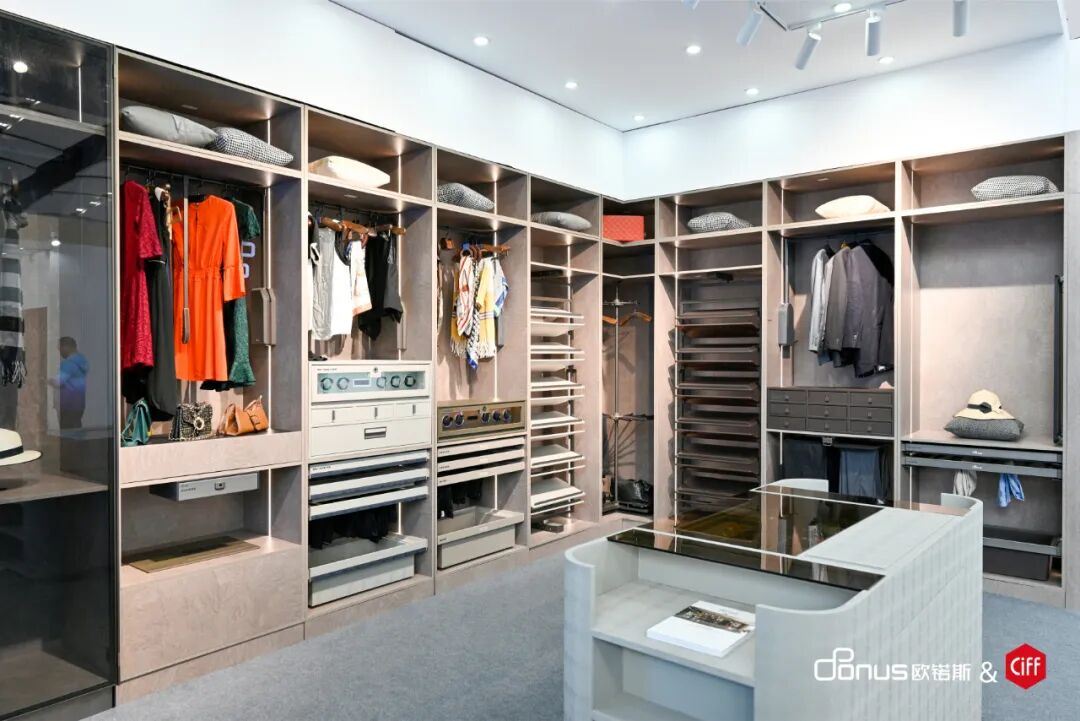
By connecting these technical foundations with the finished furniture showcased in the first-phase Home Furniture Exhibition, CIFF allows buyers to understand how ideas move from concept and material selection through manufacturing, and ultimately become products designed for everyday life.

Lifestyle is no longer a backdrop — it is the decision driver
CIFF distinguishes itself by presenting products through fully realised living scenarios rather than isolated displays. For international buyers, walking through the halls feels less like visiting a conventional trade fair and more like reading a cross-section of current and emerging lifestyles.
Domestic core spaces reflect shifting global patterns of living
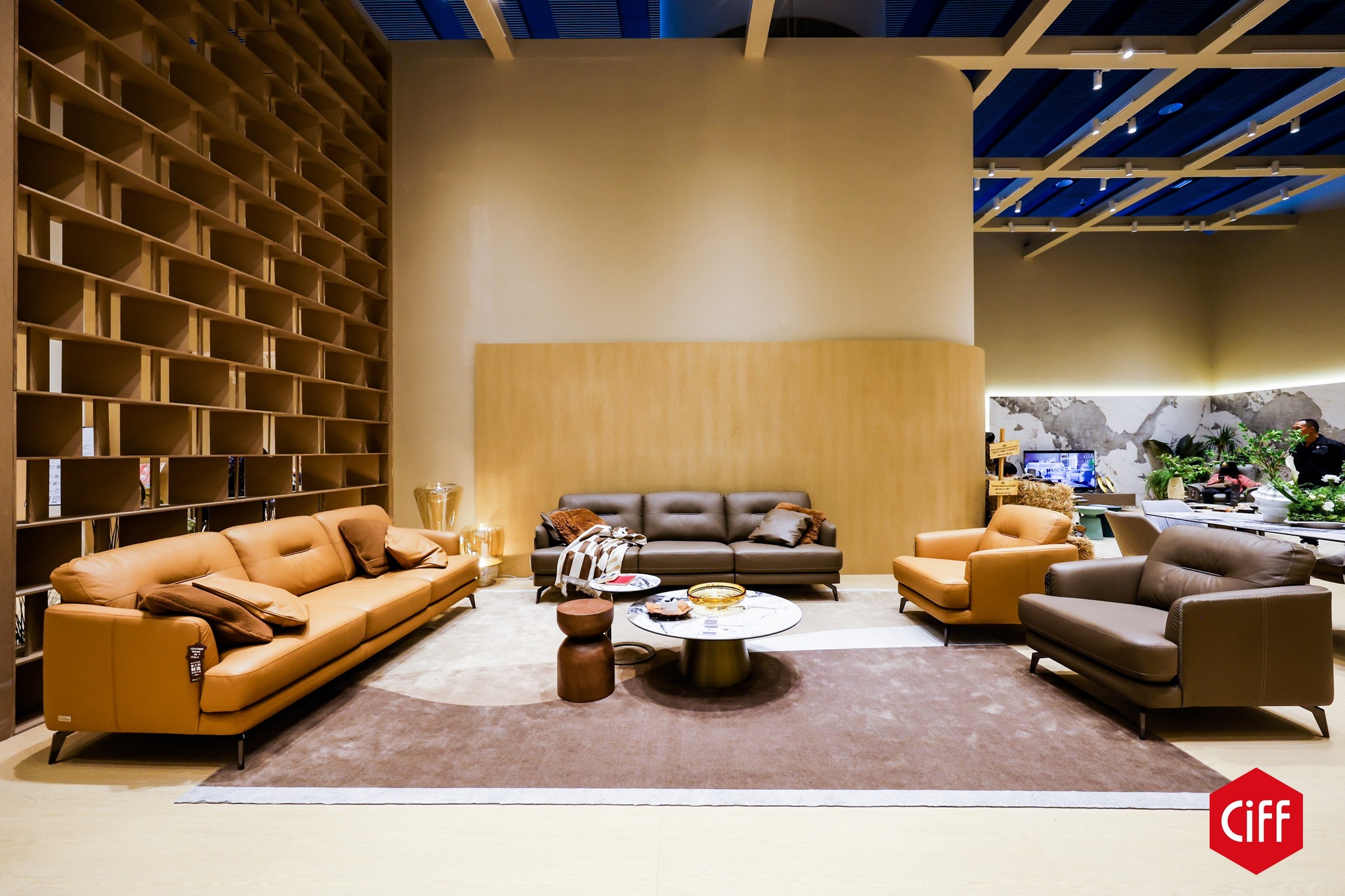
Across the Dining and Living Furniture zones spanning the Poly World Trade Center Expo Area E and the Canton Fair Complex Area C, Chinese manufacturers demonstrate how craftsmanship and system thinking respond to different cultural habits and domestic rituals around shared living and dining. Meanwhile, SOFA PLUS in Halls 9.3–11.3 offers a concentrated view of how comfort, structure and form are shaping the contemporary living room worldwide.
From indoors to outdoors: living expands into nature
As global lifestyles increasingly extend beyond interior spaces, CIFF has responded with a strong emphasis on outdoor living. Located on the ground floor of Area B, the Outdoor Furniture Exhibition — themed “Seeking the New” — is among the most visited sections of the Residential Furniture phase.
From outdoor seating and shading systems to grills and camping equipment, the zone presents a complete picture of large-scale outdoor living. The third edition of the “Nature’s Echo” special exhibition adds a more experimental layer, showcasing material innovation and advanced craftsmanship that point toward the next phase of outdoor lifestyle design.
This year, CIFF Guangzhou will also introduce a dedicated garden and landscape-focused zone in Hall 19.2 of the Domestic Furniture section (Area D). Spanning nearly 3,000 square metres, the zone brings together around 40 exhibitors, covering garden furniture, tea spaces, landscape design and hospitality-related outdoor solutions.
Among them, the Anxi Garden and Tea Space Living Theme Exhibition, co-curated with the Anxi industrial cluster—widely recognised as the “World Capital of Rattan and Iron Craft”—is likely to be a stop many international buyers will want to spend time with.
Showcasing a selection of leading rattan and iron craft manufacturers from Anxi, the exhibition bridges traditional craftsmanship and contemporary design. The works draw from the techniques of Anxi bamboo and rattan weaving, listed as a national intangible cultural heritage, while reinterpreting them through a modern design lens. The result is a softer, more tactile vision of outdoor living—one that connects nature, craft and everyday life without nostalgia or excess ornamentation.

Reading the future of work
The second-phase Office and Commercial Space Exhibition provides another important lens into future lifestyles — how people work. In Area A, the Office Environment Exhibition focuses on furniture and spatial systems responding to long working hours, hybrid work models and changing physical needs.

Extending into Area B, the Public Commercial Space zones broaden the discussion to schools, healthcare facilities, hospitality and mixed-use developments. Modular systems, low-carbon materials and smart space management solutions demonstrate how work and public environments are being redesigned for greater efficiency, adaptability and human comfort.

Trend certainty: identifying what will last
For many international buyers, CIFF is not about chasing short-term trends but identifying long-term directions. Two themes consistently stand out: ageing societies and pet-inclusive living.
Designing for Demographic Change: Ageing Populations and the Rise of Pet Households
In Hall 18.2, Area D, the Healthy Ageing Theme Exhibition spans 10,000 square metres and brings together nearly 100 exhibitors focused on senior-friendly furniture, smart ageing solutions, assistive devices, care systems and health management. The exhibition reflects how design and technology are being combined to support dignity, independence and quality of life in later years.

Nearby, Hall 19.2 hosts the debut of the Pet Furniture and Accessories Exhibition – Companion Living, a special exhibition exploring co-living between people and pets. Furniture, smart products and lifestyle accessories are designed with both human and animal behaviours in mind, showing how modularity and multifunctionality are redefining domestic space as pets become integral members of the household.

Materials as indicators of future living
Located in Hall 15.1, the CMF Trend LAB has become a must-visit destination for buyers seeking material-driven insight. Now in its sixth year, the exhibition presents the China Home Design Trend Review, drawing from research on more than 1,500 global material samples collected over five years.

Through themed laboratories — from noise-reducing materials and circular reuse strategies to contemporary Eastern aesthetics and algorithm-influenced design — CMF Trend LAB demonstrates how materials are increasingly used to respond to emotional needs, sustainability goals and technological evolution. Understanding these shifts offers buyers a clearer sense of how future living environments will feel, function and endure.

Click the image to explore CIFF Guangzhou this March:

