







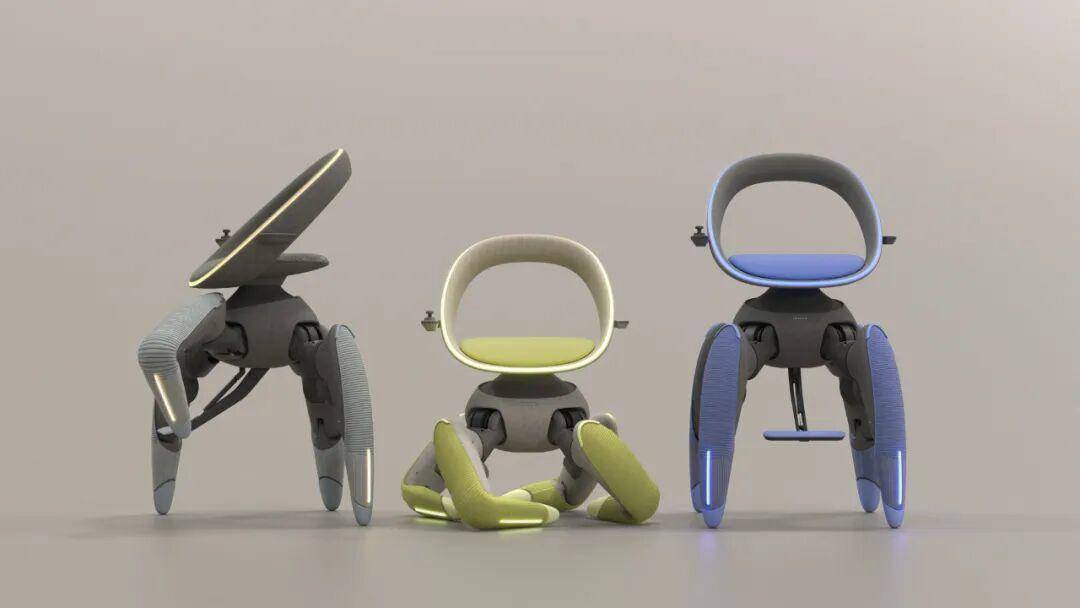
At the 2025 Japan Mobility Show, Toyota unveiled Walk Me, a radical mobility concept that reimagines how people move through space. Blurring the boundary between robotics and personal mobility, the four-legged walking seat challenges conventional ideas of wheel-based transportation by enabling users to traverse stairs, slopes and uneven terrain with ease.

Inspired by biological movement, Walk Me features four articulated robotic legs that mimic the gait of animals such as goats and crabs. Each limb can independently adjust its angle and height, allowing the device to step over obstacles, climb stairs and maintain balance on uneven surfaces. The mechanical structure is carefully concealed beneath soft, rounded surfaces, combining advanced engineering with an approachable, human-centred form.
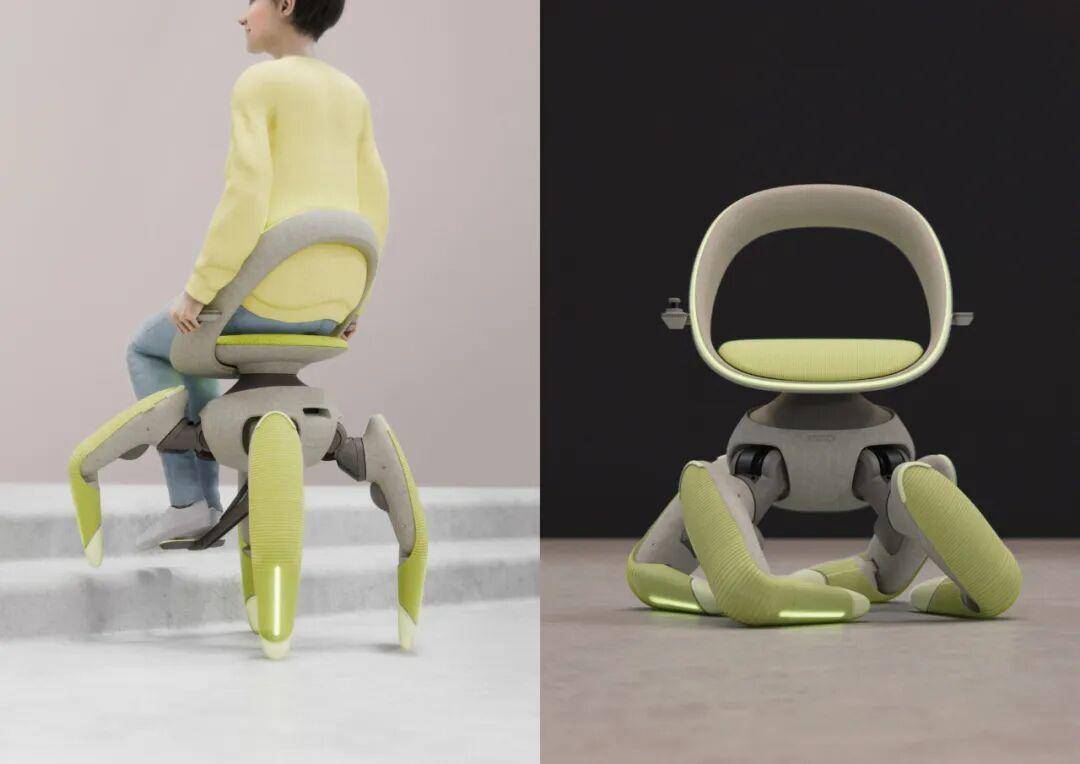
At its core, Walk Me is designed to redefine accessibility. Integrated sensors and LiDAR systems continuously scan the environment, detecting obstacles and adjusting movement in real time. Weight-distribution sensors ensure stability, while collision detection instantly halts movement when needed. Users can control the device via intuitive hand controls or voice commands, allowing for both manual and hands-free operation.

Beyond function, Walk Me reflects Toyota’s broader vision of inclusive mobility. The seat features an ergonomic design that supports the body naturally, while a compact folding mechanism allows it to be stored or transported with ease. Demonstrations showed the device navigating narrow interiors and climbing staircases—spaces traditionally inaccessible to conventional mobility aids.

Still in the concept stage, Walk Me points toward a future where mobility devices are no longer limited by wheels or flat surfaces. By merging robotics, AI and human-centered design, Toyota positions this project as a step toward a more inclusive vision of movement—one where freedom of motion is not a privilege, but a shared standard.
Source: 77 Global Furnishings Media
