







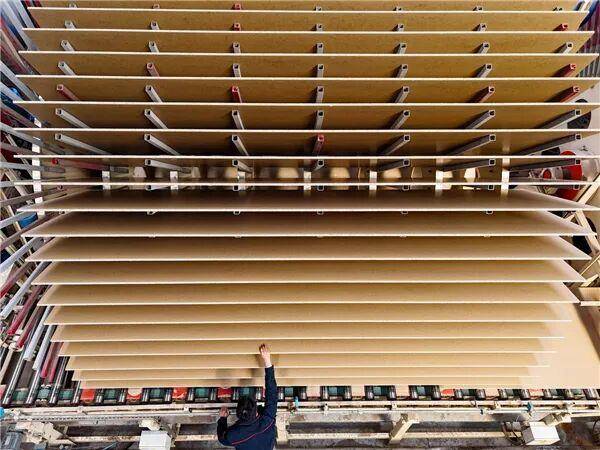
Malaysia has emerged as China’s fastest-growing source of fibreboard imports, underscoring a shifting global timber trade and a widening gap between China’s upstream materials demand and its downstream furniture exports.
Trade data from the first nine months of 2025 shows Malaysian fibreboard shipments to China soaring by 683 per cent year-on-year to 1,400 tonnes. While modest in absolute terms, the spike positions Malaysia as the most rapidly expanding supplier to the Chinese market, signalling renewed activity among domestic manufacturers and continued reconfiguration of global supply chains.
Overall, China’s fibreboard imports rose 16 per cent over the same period to 45,000 tonnes, accounting for roughly half of global traded volumes. Analysts suggest the increase reflects a cautious rebound in downstream manufacturing following an extended period of consolidation, with producers rebuilding inventories and restarting capacity.
Traditional supplier New Zealand retained its position as China’s largest source, with exports climbing 95 per cent to 22,000 tonnes. By contrast, shipments from Thailand and Germany declined, highlighting intensifying competition and shifting regional advantages.
At the same time, China’s own fibreboard exports continue to accelerate. According to figures from the International Tropical Timber Organization (ITTO), outbound shipments increased 35 per cent to 2.62 million tonnes between January and the third quarter of 2025, driven by demand across Asia, the Middle East and the Americas. Vietnam remained the largest overseas market, with imports surging 126 per cent to 501,000 tonnes, while Saudi Arabia, Mexico and the United Arab Emirates also recorded strong growth.

This expansion contrasts sharply with conditions in China’s wood furniture sector. Over the first nine months of 2025, exports of wooden furniture fell 7 per cent year-on-year to US$16.69 billion. Shipments to the United States—China’s largest single market—declined 18 per cent to US$4.24 billion, weighing heavily on overall performance. Exports to the United Kingdom and Australia, however, proved more resilient, reaching US$1.2 billion and US$1.1 billion respectively.
Industry observers describe the situation as a tale of two trajectories. Rising trade in intermediate materials such as fibreboard points to ongoing capacity expansion and industrial momentum, while weakening furniture exports reveal mounting pressure at the consumer end of the value chain—particularly in mature Western markets.
Further data adds nuance to the picture. Despite broader trade frictions, Malaysia’s imports of Chinese wooden furniture increased 18 per cent to US$445 million, underlining strong regional trade ties. Meanwhile, China’s total imports of wooden furniture fell 6 per cent to US$461 million. Italy maintained a 46 per cent market share despite lower volumes, while newer suppliers including Slovakia and Thailand gained ground.
Taken together, the figures point to a sector in transition. Rising environmental standards, higher labour costs and an increasingly complex trade environment are forcing manufacturers to rethink production models. For Malaysia, the surge in fibreboard exports suggests an opportunity to deepen its role in China’s supply chain. For China, the challenge lies in moving beyond volume-led growth—strengthening brands, upgrading technology and diversifying markets to secure long-term competitiveness.
Source: 77 Global Furnishings Media
